

By Kelvin Wilson Kasiwulaya
ABUJA, Nigeria (Connect Stories Africa)- World Leaders and Health Ministers will gather on African soil for the first time this June to confront the escalating threat of antimicrobial resistance (AMR), a “silent pandemic” that officials warn is devastating economies and killing millions across the Global South.
The 5th High-Level Ministerial Meeting on AMR, scheduled for June 28-30 in the Nigerian capital, marks a shift in the global strategy to combat drug-resistant infections. By moving the forum from high-income host nations to Nigeria, organizers aim to pivot from high-level political rhetoric to “local action” in the regions most affected by the crisis.
Under the mantra “One Health — Advancing Global AMR Commitments through Local Action,” the summit will bring together delegations from over 100 countries. Presidents Bola Ahmed Tinubu of Nigeria, Mokgweetsi Masisi of Botswana, and Nana Akufo-Addo of Ghana are expected to lead the talks.
“AMR is a big threat and continues to kill many people, especially in low- and middle-income countries,” said Dr. Jean Pierre Nyemazi, Director of the Quadripartite Joint Secretariat on AMR. “This meeting is a key moment to translate political commitments into country-level delivery.”
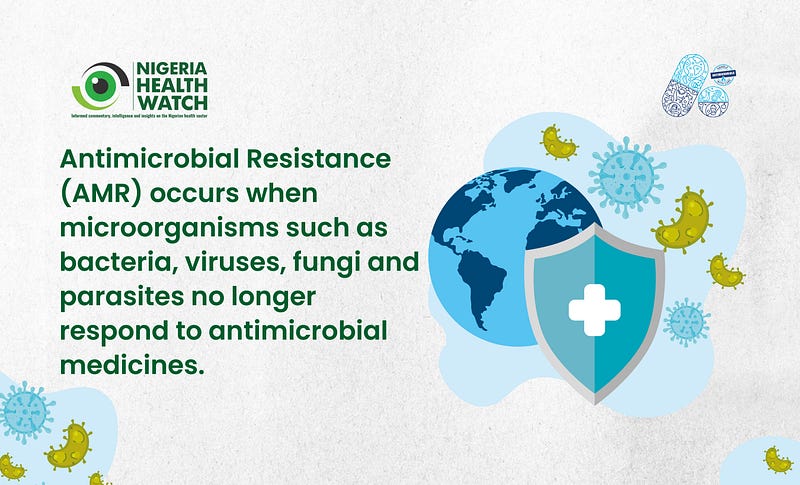
Antimicrobial resistance occurs when bacteria, viruses, fungi, and parasites change over time and no longer respond to medicines, making infections harder to treat and increasing the risk of disease spread, severe illness, and death. It is currently ranked among the top 10 global health threats by the World Health Organization (WHO).
The Abuja summit will depart from previous health-centric meetings by inviting ministers of finance, environment, and agriculture. This reflects a growing consensus that drug resistance cannot be solved in hospitals alone.
The misuse and overuse of antimicrobials in livestock, crop production, and the discharge of pharmaceutical waste into waterways are primary drivers of resistance. Officials noted that the “One Health” strategy recognizes that the health of humans is inextricably linked to the health of animals and the shared environment.
Dr. Ayoade Alakija, Nigeria’s Ministerial Global Envoy on AMR, emphasized that the summit would focus on the economic imperative of action.
“If we invest $1 on AMR, the return on investment is 11 times,” Alakija said, citing the high cost of inaction. “We have to involve those who are involved with finances. If we do not have money to fully fund our multi-sectoral action plans, how are we going to get the work done?”
A central goal of the meeting is to establish a roadmap to achieve the target set at the 2024 UN General Assembly: reducing global AMR-associated deaths by 10% by 2030. In 2019, nearly 5 million deaths were associated with drug-resistant infections.
To ensure continuity, the summit will utilize the “Troika mechanism,” building on previous commitments made in Oman and Saudi Arabia. This framework is designed to hold nations accountable for their National Action Plans, many of which remain underfunded or unimplemented in developing nations.
“All of us are at risk,” said Shobha Shukla, Chairperson of the Global AMR Media Alliance (GAMA). “But in the absence of strong public systems, those in low- and middle-income countries are at a much-heightened risk. We have to do better in protecting the medicines that save us.”
The summit is supported by the “Quadripartite” — a partnership between the WHO, the Food and Agriculture Organization (FAO), the UN Environment Programme (UNEP), and the World Organisation for Animal Health (WOAH).
As part of the lead-up to the event, GAMA also announced the 2026 Global AMR Media Awards, including a special category to amplify the voices of AMR survivors, aimed at increasing public pressure for measurable progress.
Watch the full recording of the briefing here